

How Is the Luxury Real Estate Market in Tahoe City, CA?
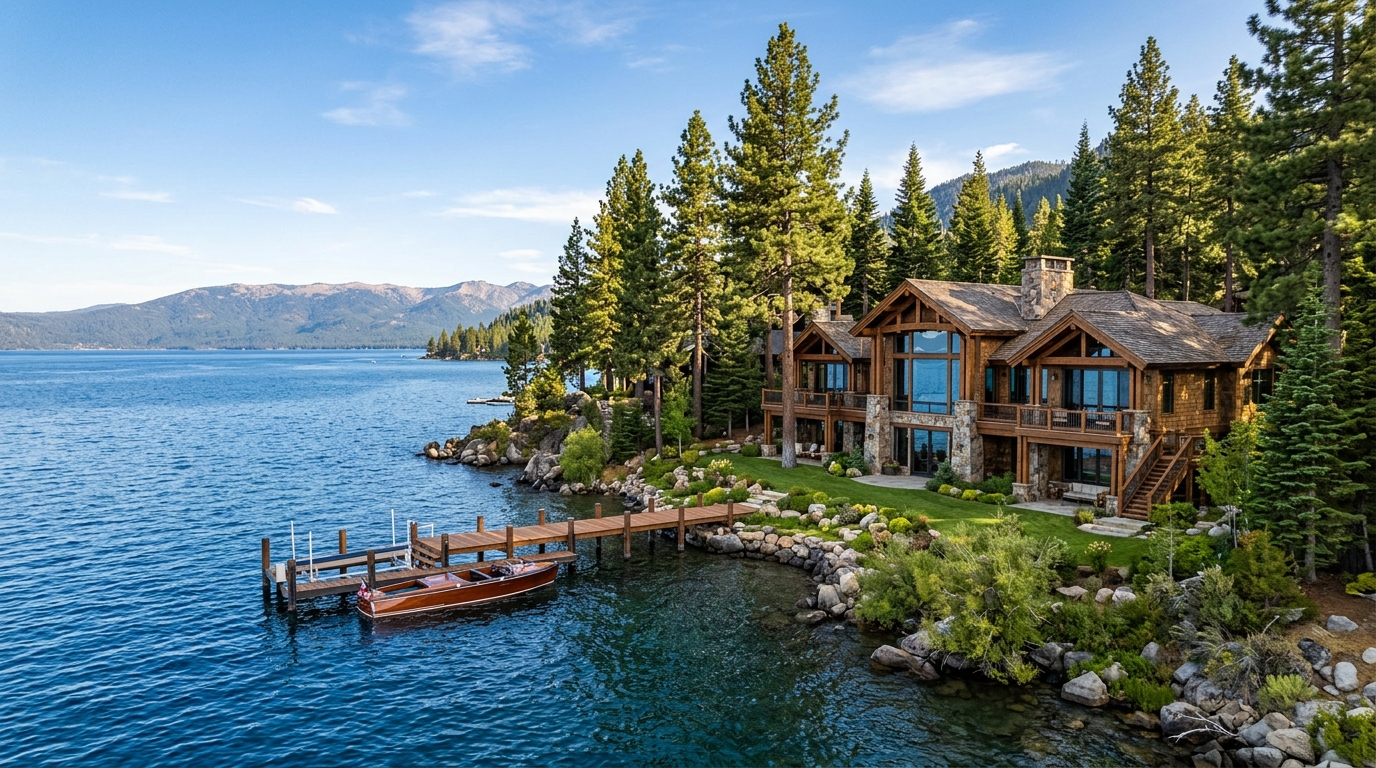
For more than forty years, the story of Tahoe City's finest homes has been told one lakefront and one legacy estate at a time, and the numbers only make sense when you understand that rhythm. The luxury market here sits above roughly $1.3 million at the median, with lakefront and legacy estates reaching far higher, according to recent closed-sale data for the surrounding Sunnyside, Tahoe City area from Redfin. This is a small, second-home-dominated market where a handful of high-end transactions can swing monthly figures dramatically, so no single number tells the full story. Different sources disagree on direction: one shows prices up sharply year over year, another shows a modest decline. Both are partly right depending on what they measure. For buyers and sellers, the practical takeaway is that Tahoe City values hinge on parcel-specific factors like lakefront access, land coverage rights, and short-term rental eligibility more than on any headline median.
What price points define the luxury tier in Tahoe City?
Luxury real estate in Tahoe City generally begins where a home clears the local median and enters the range where lakefront proximity, larger lots, and legacy character drive value. As of August 2025, the median sale price in the Sunnyside, Tahoe City area was $1.3 million, with a median of $801 per square foot, per Redfin. The luxury tier sits above those figures, and the ceiling extends far higher.
The clearest marker of the top of the market is lakefront, where prices run well above the area median and illustrate how wide the luxury band runs in this market.
Between the entry threshold and the trophy lakefront, buyers encounter a range of property types: mountain cabins with lake views, larger homes in established subdivisions, and Sierra estates.
For a broader regional view of how Tahoe City fits alongside neighboring West Shore and North Shore communities, the Lake Tahoe and Truckee luxury market report tracks these tiers across the wider area.
Why do Tahoe City home price figures swing so much month to month?
Tahoe City home price figures swing sharply because the market is small and a few high-end closings can distort any monthly median. A median is simply the middle sale price in a period; when only a handful of homes close, one or two lakefront transactions pull the middle number up or down in ways that do not reflect a real shift in underlying value.
The scale of the disagreement is instructive. Redfin reported the Sunnyside, Tahoe City median up 61.7% year over year as of August 2025, while Zillow's Home Value Index for Tahoe City stood at $1,131,358 with a 7.5% decline over the trailing year (Zillow). These point in opposite directions, but they are not measuring the same thing.
The gap is definitional, not a sign of a chaotic market. Redfin's figure is a single-month closed-sale median on a small sample, highly sensitive to which homes happened to sell that month. The Zillow Home Value Index is built from monthly changes in property-level valuations across a wide range of home types, so it smooths out mix shifts. Neither should be treated as the definitive Tahoe City trend, and the two should never be blended into a single average.
Which market numbers to verify before you rely on them
Before relying on any Tahoe City figure, confirm what it measures, when it was measured, and how large the sample was. The table below compares the two most-cited public sources so you can see why they diverge.
| Measure | Redfin (Sunnyside, Tahoe City) | Zillow (Tahoe City) |
|---|---|---|
| What it is | Single-month closed-sale median | Smoothed valuation index |
| Latest figure | $1.3M median (Aug 2025) | $1,131,358 (ZHVI) |
| Trailing-year change | +61.7% YoY | −7.5% YoY |
How do regulation and second-home ownership shape Tahoe City values?
Regulation and a second-home ownership base are the two structural forces that set Tahoe City luxury values apart from a conventional residential market. Understanding both explains why supply stays tight and why parcel-specific rules can matter more than square footage.
Tahoe City is overwhelmingly a second-home market. Roughly 69% of the housing base is non-owner-occupied, reflecting a seasonal and second-home ownership pattern (Wikipedia). This structural feature keeps year-round inventory limited and concentrates demand among discretionary buyers who are less rate-sensitive than primary-residence purchasers, which supports values at the top of the market even when broader indices soften.
Development is governed by the Tahoe Regional Planning Agency, the bi-state regulator for the basin. Land coverage, meaning how much of a parcel may be covered by structures and hard surfaces, is not a fixed percentage. It depends on soil type and is determined through either a TRPA Site Assessment or an Individual Parcel Evaluation System score (TRPA). For a luxury buyer planning to build or expand, coverage rights can be as valuable as the land itself.
Short-term rental rules also shape value for buyers who intend to rent. Lodging on the eastern Tahoe slope, which includes Tahoe City, carries a 10% transient occupancy tax, versus 8% on the western slope, and platforms like Airbnb and VRBO have no agreement to remit that tax in Placer County, so the owner is responsible. The Placer County short-term rental rules guide walks through how the permit process affects a purchase.
California disclosure law adds a final layer. Civil Code Section 1102 requires seller disclosures for the sale of a single-family home, including properties with up to four dwelling units (LegalClarity). Wildfire-zone disclosure is materially relevant in the forested Tahoe Basin and should be reviewed carefully by both sides.
Talk with our team
If you want these numbers confirmed for your situation, reach out to compare your real options and the latest local facts in Tahoe City, CA before you decide. Trinkie Watson and the team at Chase International can pull parcel-specific data and current market conditions for the property you are considering. Use the contact form, call 530.582.0722, or email twatson@chaseinternational.com to start the conversation.
Frequently Asked Questions
What defines a luxury home in Tahoe City?
Luxury homes in Tahoe City typically feature premium finishes, lakefront or mountain-view settings, expansive square footage, and high-end amenities such as private docks, spa facilities, or amenity-focused outdoor spaces. Proximity to the lake, ski resorts, and protected natural areas also contributes significantly to a property's luxury designation.
What should buyers know about the Tahoe City luxury real estate market?
The Tahoe City luxury market is influenced by seasonal demand, limited inventory, and the area's reputation as a year-round recreational destination. Market conditions can shift based on broader economic trends, interest rates, and regional housing supply, and because the market is small, one or two lakefront closings can swing a monthly median without reflecting a real change in value.
Are there any restrictions or regulations specific to buying luxury property near Lake Tahoe?
Yes, the Lake Tahoe Basin is subject to oversight by the Tahoe Regional Planning Agency, which enforces strict environmental regulations related to land coverage, construction, and land use. These rules can affect renovation plans, shoreline access, and allowable property improvements. Prospective buyers are encouraged to review applicable regulations with a licensed real estate professional and a qualified land-use attorney before making purchasing decisions.
What financing considerations are relevant for Tahoe City luxury home purchases?
Luxury properties often require jumbo loans, which have different qualification standards and terms compared to conventional mortgages. Lenders may require larger down payments, higher credit scores, and more extensive financial documentation for these transactions.