
How to Buy a Home at Lake Tahoe: The Complete 2026 Buyer's Guide
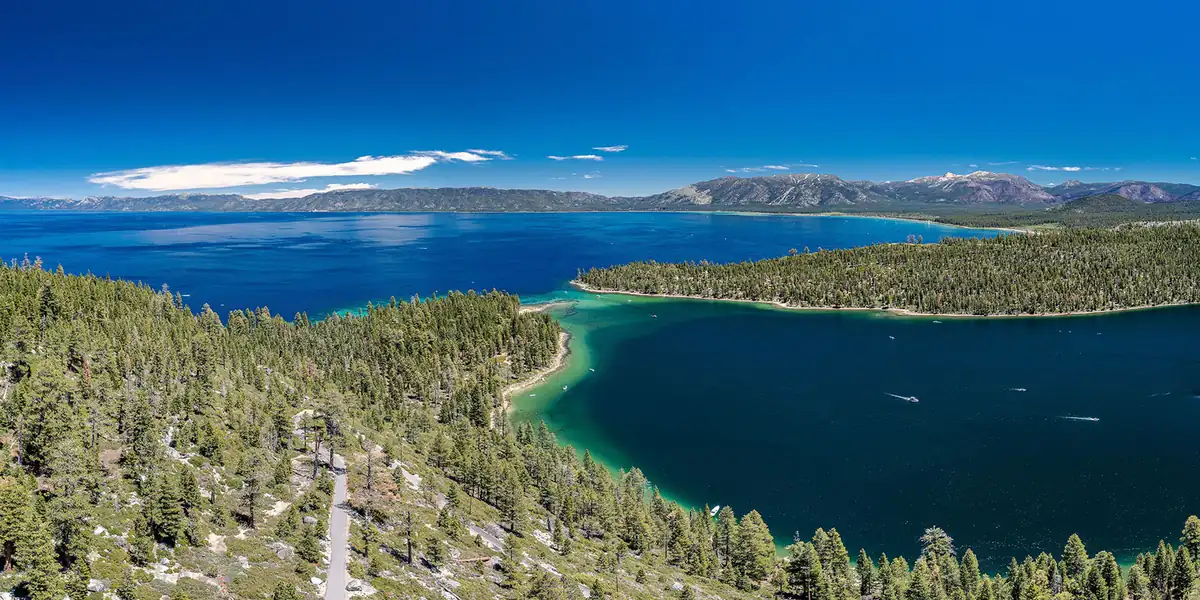
Buying a home at Lake Tahoe follows the same broad arc as any purchase, define your search, line up financing, tour, make an offer, complete escrow, and close, but a Tahoe purchase layers on details a valley home never has, a California–Nevada state line that runs straight through the basin, mountain conditions that change what inspectors look for, and, on the water, TRPA-governed pier and buoy rights. This guide walks the entire process step by step, so you know what to decide, when to decide it, and which questions protect you along the way.
Why is buying at Lake Tahoe different from buying anywhere else?
Three things make a Tahoe purchase its own discipline. First, the lake is bi-state: the California–Nevada border cuts through the water and the shoreline, so the same lake can mean two different tax regimes, two sets of local rules, and two different real estate licenses. Second, everything sits at roughly 6,200 feet or higher, where snow load, roofs, defensible space, and heating systems all carry more weight in due diligence. Third, the shoreline itself is regulated: the Tahoe Regional Planning Agency (TRPA) governs land coverage and every pier, buoy, and boat lift around the lake’s ~72 miles of shore.
None of this should intimidate a buyer, it simply means the right sequence and the right local guidance matter more here than in most markets. The steps below put them in order.
What are the steps to buy a home at Lake Tahoe?
Here is the process at a glance. Each step is expanded in the sections that follow.
| Step | What you do | Why it matters at Tahoe |
|---|---|---|
| 1. Define your search | Choose shore, community, and lakefront vs. lake-view | The CA/NV line and each community carry different taxes, rules, and lifestyle |
| 2. Get financing ready | Pre-approval, or proof of funds for cash | Luxury prices often mean jumbo loans; strong positioning wins low-inventory deals |
| 3. Tour with a local agent | See homes and shoreline in person, ideally across seasons | Access, snow, sun exposure, and water rights are only visible on the ground |
| 4. Write the offer | Price, terms, and the right contingencies | Mountain and shoreline diligence must be protected in the contract |
| 5. Escrow & inspections | Inspections, appraisal, title, disclosures | Snow load, roof, well/septic, wildfire, and pier/buoy permits get verified here |
| 6. Close | Sign, fund, record, take possession | You take ownership of the home and any scarce shoreline rights |
Step 1: How do you define your Lake Tahoe search?
The first real decision is not a house, it’s a place. Start with three questions.
Which shore, and which side of the state line?
Lake Tahoe’s shores each have a personality. The West Shore is forested, quieter, and gets afternoon and evening sun on the water. The East Shore, largely in Nevada, offers dramatic granite, sunrise light, and communities like Incline Village and Crystal Bay. The North Shore blends Tahoe City, Kings Beach, and the Truckee gateway; the South Shore centers on services, skiing, and the Nevada casino corridor at Stateline. Because the California–Nevada state line divides the basin, the same view can come with or without state income tax. Weigh that early, the California vs. Nevada guide and the communities guide exist for exactly this decision.
Lakefront, lake-view, or in-community?
The single biggest price and lifestyle fork is water access. Lakefront means you own frontage and, often, a permitted pier or buoy, the rarest and most valuable category. Lake-view homes capture the view at a fraction of lakefront cost but without private shore. Many buyers are happiest in a community with shared beach or pier access, which delivers the water lifestyle without lakefront pricing. If the water is your priority, begin with the complete lakefront guide.
Weekend home, full-time, or investment?
How you’ll use the home changes the search, and the financing and tax treatment behind it. A ski-weekend base has different priorities (lockup-and-leave, proximity to lifts, snow-country access) than a full-time residence or an income property. If renting is part of the plan, note that short-term-rental rules vary sharply by town and county and change over time; the second home vs. investment property guide walks through how that decision reshapes everything downstream.
Step 2: How do you get financing ready for a Tahoe home?
Get positioned before you fall in love with a house. Tahoe’s luxury and lakefront prices frequently exceed conforming loan limits, which means most buyers use a jumbo loan, a portfolio loan, or cash. Underwriting large loans takes longer and asks more questions, so a strong, current pre-approval from a lender who understands luxury second homes across California and Nevada is one of the most competitive things you can bring to a low-inventory market.
A few Tahoe-specific realities: second-home financing carries different terms than a primary residence, and investment-property financing differs again: the classification you choose affects rate, down payment, and what you can legally do with the home. Cash carries real weight here, both for speed and for competing on trophy properties. The financing guide covers jumbo vs. portfolio loans, second-home vs. investment terms, and why pre-underwriting matters at this price point. (None of this is financial advice: confirm specifics with a licensed lender.)
Step 3: What should you look for when touring Tahoe homes?
Tahoe rewards seeing a home in person, and if you can, in more than one season. A house that’s effortless in July can reveal a steep, unplowed approach in February. When you tour, look past the finishes at the conditions that define mountain living:
- Access and snow. How is the driveway’s grade and exposure? Who plows the road? Is it a lockup-and-leave for a weekend owner, or does it demand year-round presence?
- Sun and orientation. West Shore light versus East Shore sunrise changes the daily experience. See the home at the time of day you’ll actually use it.
- The building envelope. Roof pitch, snow-shedding, decks, and heating all matter more at altitude: note them now so inspections in Step 5 confirm what you saw.
- Water access, if applicable. On lakefront, confirm what pier, buoy, or boat-lift features are present, and remember those are permitted assets, not automatic rights.
This is where a local agent earns their keep, flagging a mediocre lot behind a beautiful house or an unpermitted structure before you write an offer. The out-of-area buyer’s version of this, touring efficiently across a single trip, is covered in the Bay Area buyer’s guide.
Step 4: How do you write a winning offer at Tahoe?
In a market defined by scarce inventory, a clean, well-positioned offer from a pre-approved (or cash) buyer wins, but never at the cost of the diligence that protects a mountain or shoreline purchase. A sound Tahoe offer balances competitiveness with the right contingencies:
- Inspection contingency broad enough to cover roof, structure, and mountain-specific systems.
- Appraisal contingency, particularly important for unique luxury homes that are hard to comp.
- Title and disclosure review, including any HOA, shared-access, or easement documents.
- On lakefront, specific contingencies to verify pier/buoy permits and TRPA compliance before you’re committed.
The art is calibrating strength to the property and the competition, which is exactly the judgment an experienced local broker provides.
Step 5: What happens during escrow and inspections at altitude?
Escrow is where a Tahoe purchase diverges most from a lowland one. Beyond the standard inspection, appraisal, and title work, altitude and terrain add their own checklist:
- Snow load and roof. Roofs here are engineered for heavy snow; verify condition, structure, and any drainage or ice-dam history.
- Defensible space and wildfire. California’s Zone 0 (ember-resistant zone) concept and defensible-space requirements affect landscaping and, sometimes, insurability.
- Well and septic. On outlying parcels not served by a district, condition and capacity of the well and septic system must be confirmed.
- Pier, buoy, and boat-lift permits. On lakefront, confirm in writing that shoreline structures are permitted, registered, and conveying: TRPA governs all of it.
- Appraisal for unique homes. One-of-a-kind luxury and lakefront properties can be genuinely difficult to appraise; expect this to take time.
Each of these is a place a deal can wobble, and a place a specialist keeps it on track. The full escrow walkthrough lives in the escrow, inspections & appraisals at altitude guide.
Step 6: How do you close on a Tahoe home?
With contingencies satisfied, escrow closes: typically 30 to 45 days from accepted offer, sometimes longer when permit or appraisal diligence runs long, and often faster for cash. You sign, funds are wired, the deed records, and you take possession of the home and, on the water, its scarce shoreline rights. From there it’s about protecting the asset: insurance, the seasonal rhythm of a mountain property, and, if you plan to rent, confirming the current rules in your specific jurisdiction.
How does the California–Nevada state line change the buying process?
This is the dimension buyers from outside the basin most often underestimate. The state line is not a formality, it decides:
- Income tax. Nevada has no state income tax; California does. For many buyers eyeing Incline Village or Crystal Bay, that’s decisive.
- Property tax and assessment mechanics differ by state: see the property-tax comparison.
- Permitting and local rules, including short-term-rental regulation, vary by county and town on either side.
- Who can represent you. A real estate license is state-specific, so an agent licensed only in California can’t write your offer on the Nevada shore, and vice versa.
That last point is why dual licensure is such an advantage at Tahoe: it keeps your search open to the entire lake rather than half of it.
Who is Trinkie Watson, and why work with a dual-licensed Tahoe guide?
Trinkie Watson of Chase International has spent 40+ years specializing in Lake Tahoe real estate and has closed 100+ lakefront transactions across the basin. Critically, she is licensed in both California and Nevada, so whether your search leads to the California West Shore, the Nevada East Shore, Incline Village, Tahoe City, or Truckee, one broker can guide the entire process end to end, on either side of the state line. That combination, deep local tenure, lakefront depth, and bi-state licensure, is exactly what a Tahoe purchase asks for.
Ready to start? Begin by narrowing your search with the communities guide or the lakefront guide, get positioned with the financing guide, and when you’re ready to tour or write an offer, contact Trinkie Watson directly.