
Living at Lake Tahoe: The Four-Season Luxury Lifestyle Guide
Living at Lake Tahoe means trading a single-season vacation for a genuine four-season rhythm. In winter you ski Palisades Tahoe, Northstar California, Heavenly and Diamond Peak; in summer the lake itself becomes the center of life: boating, paddleboarding, and evenings on the water; fall and spring deliver the quietest, most beautiful weeks of the year; and through all of it, the towns of Truckee, Tahoe City and Incline Village hold a real year-round community. This guide walks through what each season actually feels like, what full-time life here involves, and why so many second-home owners eventually make Tahoe their primary home. If you are weighing the real estate itself, start with the Lake Tahoe lakefront guide and the communities guide.
What does each season at Lake Tahoe offer?
The single most important thing to understand about Tahoe is that it is not a summer lake town that happens to get snow, nor a ski town that happens to sit on water. It is genuinely both, and the calendar turns over completely four times a year.
| Season | What defines it | Where life centers |
|---|---|---|
| Winter | Skiing and snow sports across a dozen resorts; snowy villages; fireside evenings | The mountains: Palisades Tahoe, Northstar, Heavenly, Diamond Peak |
| Summer | The lake: boating, paddleboarding, beaches, hiking, long golden evenings | The water and the shore: piers, buoys, Sand Harbor |
| Fall | Crisp air, turning aspens, empty trails, the year’s quietest luxury weeks | Everywhere: the shoulder season locals treasure |
| Spring | Ski-and-lake overlap: morning turns, afternoon on the water; snowmelt and wildflowers | Both the peaks and the shoreline in a single day |
What is winter really like at Lake Tahoe?
Winter is the season that made Tahoe famous, and it delivers a concentration of skiing found in very few places on earth. Within a short drive you can reach Palisades Tahoe and Alpine Meadows, now connected as one vast resort, Northstar California, Heavenly above South Lake Tahoe, Diamond Peak and Mt. Rose on the Nevada side, Homewood on the West Shore, and Tahoe Donner’s family-scaled hill near Truckee. Palisades Tahoe hosted the 1960 Winter Olympics, and the region has been a serious ski destination ever since.
For residents, winter is less about the marquee powder days and more about the daily texture: ski-in access from certain neighborhoods, a standing habit of first-chair mornings, and the particular quiet of a snowbound street. It also asks something of you: snow tires, plowing, and a willingness to plan around storms. The full picture, resort by resort and the reality of owning through the cold months, is in Winter in Lake Tahoe.
What is summer like on the lake?
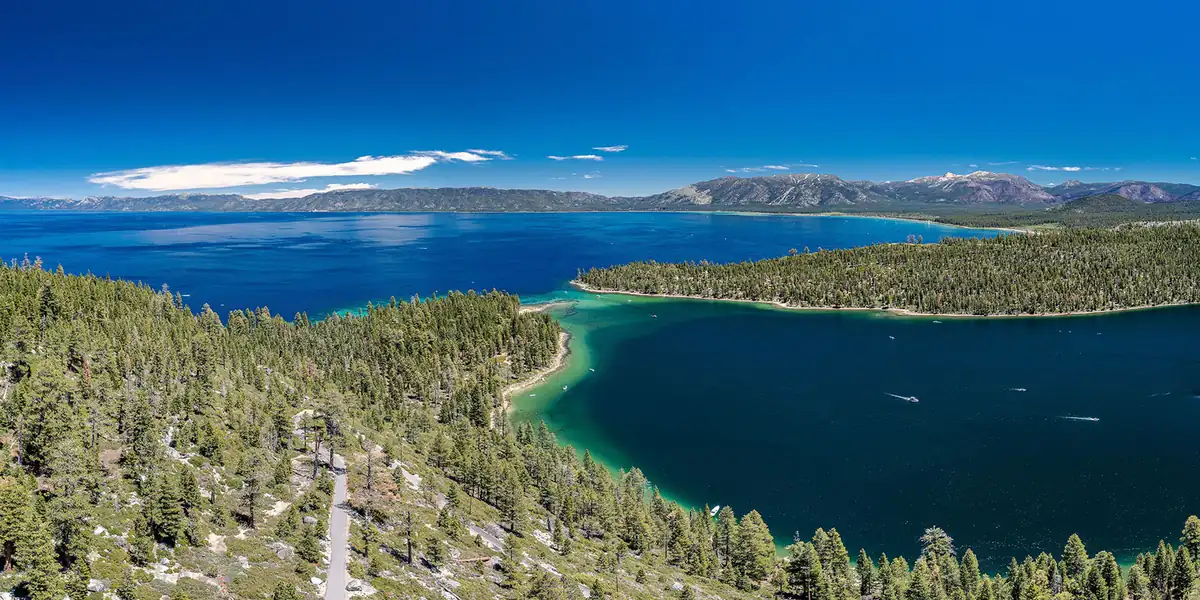
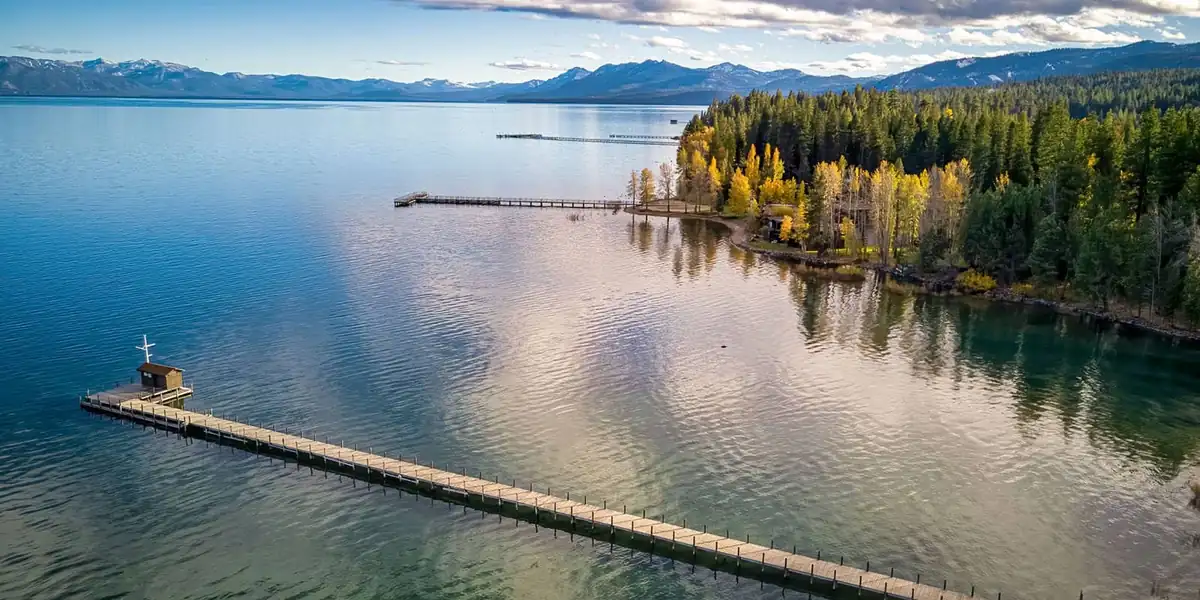
If winter belongs to the mountains, summer belongs to the water. Lake Tahoe sits at roughly 6,225 feet, and its famously clear, cold water becomes the organizing feature of daily life from June through September. Owners with a pier or buoy step from the house to a boat; those without still have Sand Harbor, Kings Beach, and the West Shore beaches, plus a summer of paddleboarding, kayaking, sailing and swimming.
Summer evenings are Tahoe at its most seductive: long golden light across the water, dinners that spill onto decks and docks, and the indoor-outdoor entertaining that luxury buyers specifically design for. That side of lake life, hosting, and the home features that make it effortless, is covered in Entertaining by the Lake. The waterfront itself, and what frontage actually conveys, is in the lakefront real estate guide.
What about fall and spring, the shoulder seasons?
Ask a longtime resident for their favorite season and many will quietly say fall. After Labor Day the crowds thin, the air turns crisp, the aspens gold, and the trails and restaurants belong to locals again. It is arguably the most beautiful and least appreciated stretch of the Tahoe year: warm afternoons, cold mornings, and a lake that turns glassy and empty.
Spring is Tahoe’s best-kept trick: the overlap season. On the right April or May day you can take morning turns at Palisades Tahoe and be paddleboarding on the lake by afternoon. Snowmelt swells the creeks, wildflowers return to the meadows, and the region exhales between its two busy seasons. For residents, these shoulder weeks are the reward for living here full-time rather than only visiting at the peaks.
Where do you eat, gather, and find community?
Tahoe’s dining and social life cluster around its towns. Truckee anchors the north with a historic downtown of restaurants, wine bars and shops, and it is the region’s true year-round town, it does not empty out midweek. Tahoe City serves the West Shore and the lake’s north end, and Incline Village on the Nevada shore pairs fine dining with resort amenities. The Northstar and Palisades base villages add walkable dining and àprès-ski scenes in winter.
Community here is real and, for a resort region, unusually durable. Clubs, ski teams, lake associations, and volunteer networks knit residents together, and the shared rhythm of the seasons gives newcomers an easy way in. Many buyers are surprised how quickly a second home turns into a primary one once the community takes hold.
What is the wellness and outdoor culture like?
Life at 6,225 feet is, almost by default, an active life. The Tahoe Rim Trail encircles the entire basin, and hiking, trail running, mountain biking, road cycling, golf and open-water swimming fill the warm months while backcountry touring and Nordic skiing fill the cold ones. The alpine air, the water, and the sheer proximity of the outdoors make wellness less a program than a byproduct of living here. The full range of year-round recreation, beyond just the lake and the resorts, is laid out in Beyond the Waterline.
Should you live here full-time or keep it a second home?
For decades the default was a second home: summers on the lake, holidays on the slopes. That has shifted. Remote work, better year-round services, and the pull of the lifestyle have moved many owners to full-time residency. The infrastructure supports it: Truckee, Tahoe City and Incline Village offer schools, medical care and services that make Tahoe livable in January, not just July.
There is also a practical dimension. On the Nevada side: Incline Village, Crystal Bay, and the East Shore: there is no state income tax, which motivates some buyers to establish genuine residency. The California vs. Nevada decision is unpacked in the California vs. Nevada guide. Either way, the more time owners spend here, the more the shoulder seasons and the community, the parts you only get by staying, tend to tip the scale toward full-time.
Why do people ultimately move to Lake Tahoe?
The honest answer is rarely one thing. It is the clean alpine lake and the four real seasons; the ability to ski before work and paddle after; the quiet of a fall morning and the long light of a summer evening; the durable community; and, for many families, the sense that a Tahoe home is something to hold and pass down rather than simply own. That legacy dimension, why families keep lakefront for generations, is explored in Tahoe as a Legacy Asset.
If you are weighing a move or a purchase, the most useful next step is time on the ground in more than one season. Trinkie Watson of Chase International has spent 40+ years at Lake Tahoe, has handled more than 100 lakefront transactions, and is licensed in both California and Nevada, which means she can walk you through both shores and every season honestly. Explore the community pages, read the lakefront guide, or get in touch.